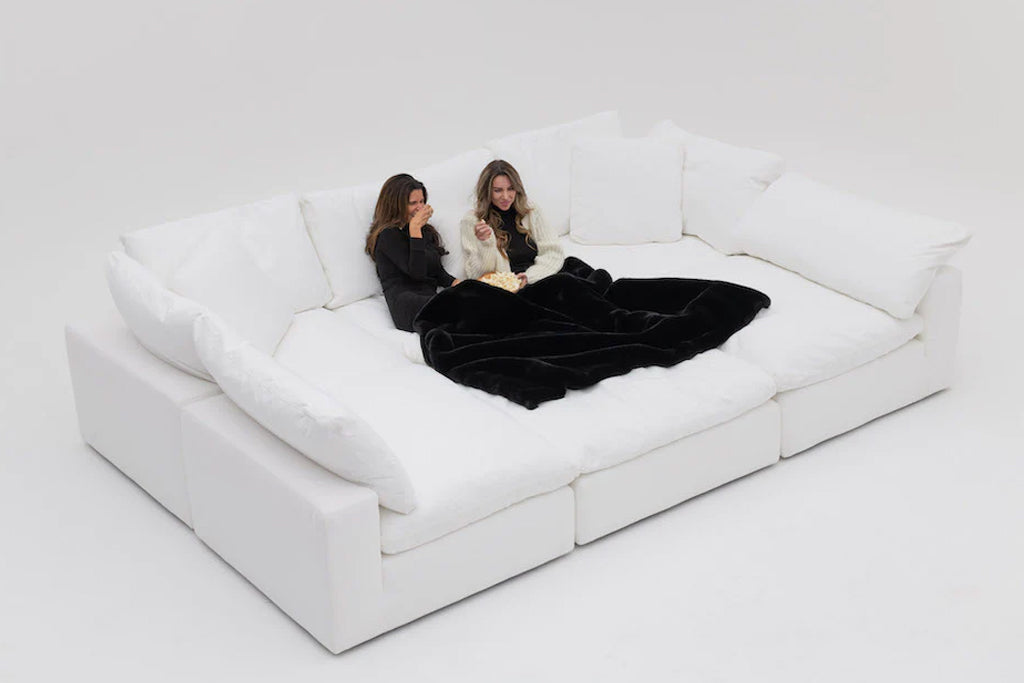

The living room is the heart of a home. It's usually where you go to unwind after a long day, gather to chat with family and friends, and rest and recharge. That's why it makes sense to make your living room one of the most comfortable and inviting areas in your home, and that begins with finding the perfect couch.
Instead of settling for fast-furniture that's going to sag in a few months, give off toxic gases, and end up in a landfill in a few years, it's more beneficial, all-around, to opt for seating that's an intentional investment, especially since your living room couch likely does more work than almost any other item of furniture in your home.
Choosing a couch should be based on how you want your home to function and feel, and that starts with finding pieces created for health, longevity, and uncompromising aesthetics that can adapt as your personal style evolves. A good couch should survive everything from everyday spills and moves to family movie nights and changing decor.
So whether you're moving into a new space or simply updating your current home, these expert living room couch ideas will help you choose, style, and arrange your couch.
Living Room Couch Ideas for Every Space
Good interior design is about understanding room proportions and scale, using quality materials, and thinking about how your furniture best functions in your daily life; it's not about simply following trends.
If you're looking for new couch ideas, it's best to start by assessing your floor plan, where the couch will be placed, and how it works both physically and visually.
Get the Scale Right With the Two-Thirds Rule
The most common error when it comes to living room decor is misjudging the proportions of a room. If your couch is too large, it tends to swallow the space and make it feel crammed and claustrophobic; conversely, if your couch is too small, the space can feel sparse and ungrounded.
To balance a space, use the two-thirds rule:
- Coffee Table: Your main coffee table should be approximately two-thirds of the total width of your couch.
- Wall: Your couch should be about two-thirds of the length of the wall it's placed against.
-
Ceiling: The height of your couch should take up around two-thirds of the vertical wall height.
- Usually, in a room with a regular 8-foot ceiling, a low-slung couch is best, but in vaulted rooms, couches with higher backrests tend to fill the space better.
A Sectional Couch for Open-Plan Spaces
In open-plan houses, using a sectional couch is a great way to separate different spaces. A sturdy sectional naturally categorizes and separates a lounge area from other zones, which automatically solves one of the biggest issues in open-plan living: defining separate spaces.
An L-shaped configuration can establish where one zone ends and another begins, creating natural boundaries between rooms. Modular designs give you even more flexibility in your layout as your needs change. For example, you can start small, with a 2-Cube Loveseat, or go for a 3 Cube Cozy Couch for a larger space. The options are endless.
Choose modular couches built on solid, kiln-dried hardwood frames, and avoid cheap plywood options that often warp with use. Investing in kiln-dried hardwood will ensure your couch's structural integrity for decades.
Combining a heavy-duty frame with a cloud-style couch will give you both the ultimate lounging experience and clean, solid structural lines.
Long-term adaptability and longevity matter when you're buying premium furniture. For example, Soulfa's modular pieces are USA made and designed to last, using kiln-dried hardwood as well as high-density foam. Plus, every cube is delivered fully assembled as a solid structure.
If you'd like to know more about modular couches, read our guide: What Is a Modular Couch?

Choose Your Color Wisely
The color of your couch sets the tone for the entire color theme of the room, and there are generally two options:
- Raw Neutral Beauty: If you choose more neutral tones, it gives you the freedom to change your rugs, lighting, and art over time, without having to continuously re-upholster your couch. Colors like white, warm oatmeals, soft creams, and textured greys all give a room a sense of tranquility.
- The Statement Couch: If you prefer to make a statement and your living room décor and finishes are minimalist, then a bold-colored couch is a great way to create a sophisticated focal point. Deep espresso and rich earthy tones can transform your couch into an art piece.
Regardless of the color you choose, the safety of the materials is most important. Opt for fabrics that are non-toxic and made without harmful chemical retardants and off-gassing binders. If you choose a couch with high-performance, stain-resistant fabrics, you'll be able to enjoy it without constantly fearing spills and messes, even if you go for a light neutral color.
The best way to choose your color is to get a Fabric Swatch Kit to compare it with other elements in your living room, and when deciding, try to think beyond just this year's palette.
Balance: Functionality, Style, and Couch Arm Design
Couch arms seem insignificant until you realize how much they actually influence the comfort and overall look of your couch.
Wide, structured arms create depth and look luxurious, while creating much needed back support. Armless couches have a more relaxed feel and can make a room feel less visually obstructed.
The next thing to consider is how you actually lounge. Do you rest against the arm? Do you have children climbing on the couch? Do you need somewhere to lean while reading?
- Armless Modules
- Aesthetic: Minimalist
- Best For: Different configurations in larger rooms
- Track Arms
- Aesthetic: Contemporary
- Best For: Maximizing seating
- Wide/Block-Shaped Arms
- Aesthetic: Luxurious
- Best For: Solid silhouettes
How to Arrange Your Living Room Couch to Maximize Space
Once you've chosen your couch style, how you arrange the layout affects how effortlessly your home will function day-to-day.
Open-Concept and Multipurpose Living Room Layouts
If your couch is going into a multipurpose environment, flow is everything. You don't want to be bashing into furniture as you move from space to space. It's best to avoid pushing your couches against the perimeter walls too; it's much more aesthetically pleasing to "float" your furniture into clusters, which creates more intimacy and space for conversation. Walk paths should ideally be 30 to 36 inches wide so movement is effortless.
Designing Around TVs, Fireplaces, and Focal Points
If your living room has more than one focal point, such as a wall-mounted TV and a fireplace, it's best to position your main couch directly opposite the primary visual element. You can use modular corner pieces or swivel chairs to allow attention and eye contact to shift naturally to the secondary focal point.
Coffee Tables and Ottomans
Placing your coffee table 14 to 18 inches away from the edge of your couch will give you enough legroom but also keep the table in arm's reach for your drinks and snacks. If you prefer a softer, more plush look, use an upholstered modular ottoman instead of a traditional coffee table. Simply add a 30” x 30” square wooden tray on top of the ottoman for a versatile coffee table.
Large Spaces
If you have a very large room and too much space, a single couch will feel lost. Placing two couches facing each other over a large rug creates an elevated look and a comfortable conversational space.
Alternatively, an L-shaped modular couch, or a sectional sofa, naturally divides expansive spaces into more distinct, cozier zones.
Couch Features That Work
When purchasing a quality piece of furniture, it pays to look beyond the surface upholstery to both the daily practicality of the piece and its structural integrity. Your furniture should adapt to your life, and not the other way around.
These are features that work well:
- No Assembly Required: Couches that arrive as a solid, single-structure unit are best for convenience and also a sign of true craftsmanship, quality and long term durability. The fewer loose screws, the better.
- High-Density Foam & Memory Foam: Cheap poly-foam cushions tend to sag and flatten, and constantly need to be refluffed. Upgrading to the Triple-Layered™ seat cushion means your cloud-style couch will retain its crisp, elegant structure long term.
- Interchangeable & Washable Covers: Machine-washable covers that easily unzip allow you to refresh your couch or clean up after kids and pets without having to replace the couch frame.
At Soulfa, our couches have all these features, and more. We use high-resilience foam and PFAS-free, spill-resistant, tight-weave fabrics to create luxury sofas that beautify any space.

FAQs
What Are Trendy Couch Styles for 2026?
The design trends in 2026 lean towards organic luxury and low-slung modular pieces using health-conscious materials. Cloud-style comfort crafted with high-density memory foam is taking over from the overly structured statement couches previously favored. Homeowners are opting for timeless couches made with non-toxic materials rather than disposable, mass-produced furniture.
What Color Couch Never Goes Out of Style?
Warm neutrals, like white sandl, fog grey, soft charcoal, and rich espresso, never lose their appeal. A neutral-fabric couch is a foundation, allowing you to update wall colors, accent pillows, and art over time.
There is no "best color," but warm neutrals are best for the long term because they can be used in different styles, whether it's contemporary, coastal, modern, or minimalist.
The advantage of neutrals is their flexibility: when your style changes, you can refresh the room around the couch, rather than replacing your biggest piece of furniture.
Should a Couch Be Lighter or Darker Than the Walls?
There is no strict rule, and either can work, but typically, contrast creates depth:
- Lighter Couch than Walls: Creates a striking contrast against moody, dark paint and makes the couch more prominent.
- Darker Couch than Walls: Creates a lighter, quieter space.
When choosing a couch color, you should also take into account:
- Natural light
- Children
- Pets
- Room size
- Flooring
- Amount of everyday use
Why Shouldn't You Put a Couch Flat Against a Wall?
Pushing your couch flat up against a wall can make the space feel boxy and smaller than it is. Even pulling the couch as little as three to six inches away from the wall will instantly create visual depth and improve air circulation, and it also means your curtains or blinds can hang properly. However, if you have a very small living room, sometimes putting the couch directly against the wall may be the most space-efficient option.
What Are 5 Things That Make a Living Room Look Dated?
- Exposed Clutter & Cables: Not using space-efficient storage.
- Matchy-Matchy Furniture: Buying an identical couch, coffee table, and loveseat set automatically diminishes a space's personality.
- Fast-Furniture Proportions: Lightweight, hollow furniture lacks the presence of handcrafted pieces.
- Rigid Furniture Pushed Against Walls: Using perimeter-only couches sacrifices a room's flow.
- Sagging, Misshapen Cushions: Cheap foam deteriorates quickly, which leaves couches looking tired and neglected.
Conclusion: Investing in Furniture Built for Decades
When choosing a couch, measure carefully; consider the circulation, flow of the room, and your other furniture; think about your decor focal points; and choose a configuration that both looks good and is functional. Then, look past the upholstery and examine what you are actually purchasing: the frame, fabric, foam, maintenance requirements, and warranty. This is where the differentiation between long-term investment couches and disposable furniture occurs.
So, whether you're curating a simple living room or a sprawling family space, your couch choice comes down to one essential philosophy: invest in long-lasting value. If you choose fast furniture that relies on mass production, it will likely need to be replaced after a few seasons; that's what it's designed for.
The best living room couch ideas are about finding a solution that fits your space, is functional in your daily life, and remains worth keeping.
With our 20-year warranty, Soulfa couches are all about this longevity. Our couches are built for decades, so if you're looking for a long-term investment, Soulfa's cloud-like modular couches are for you.