

Modular couches have become one of the most popular furniture choices for modern homes, and it's easy to see why. Life changes, families grow, people move houses, and living rooms get redesigned. A traditional sofa with a fixed setup often can't keep up.
Many homeowners have experienced the frustration of buying a beautiful couch only to realize it no longer suits their space a few years later. It might be too large for a new apartment, too small for a growing family, or too difficult to move through doorways and stairwells.
A modular couch solves many of these problems. Instead of being built as a single piece, modular sofas have individual sections that you can arrange, expand, or reconfigure over time.
In this guide, you'll learn exactly what a modular couch is, how it compares to traditional sofas, its advantages and disadvantages, and what to look for before making an investment.
Key Takeaways
- A modular couch is built from individual cubes or pieces that you can rearrange as your needs change.
- Many sectional and modular sofa sets offer flexible layouts and ample seating, and allow you to reconfigure or expand your setup over time.
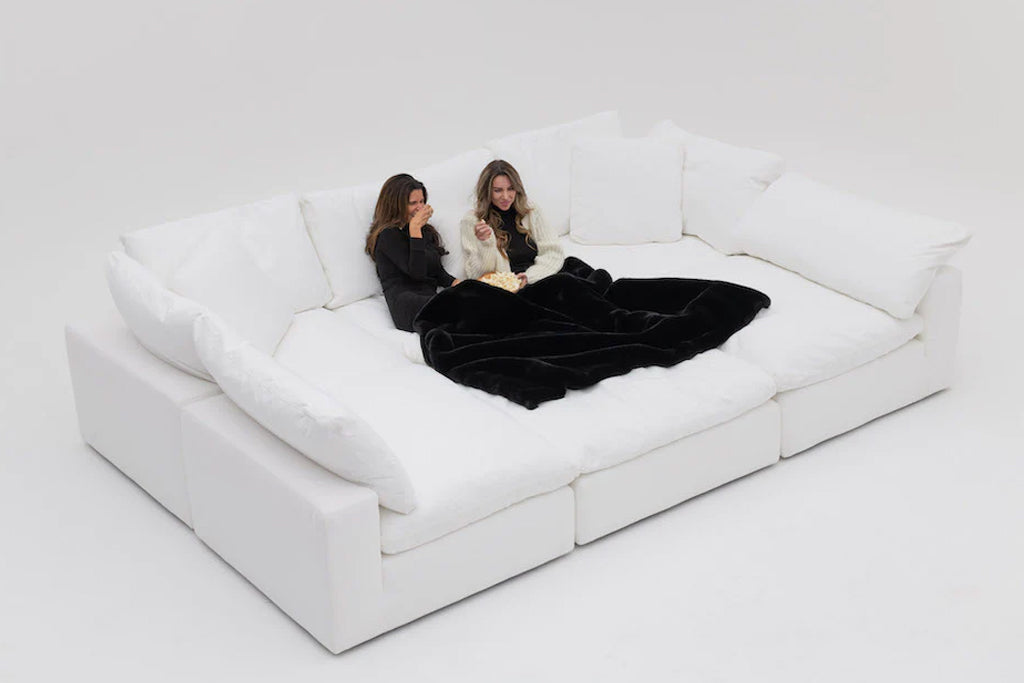
- Modular couches can be configured into L-shaped, U-shaped, chaise, or movie pit layouts.
- Features like washable covers and performance fabrics make modular couches practical for daily life.
- Quality matters. Look for durable frames, supportive cushions, and strong connection systems.
- The perfect sofa should fit your space today and adapt with you for years to come.
What Is a Modular Couch?
A modular couch is a sofa made from separate pieces, cubes, or modules that connect together to create a larger seating arrangement. Unlike traditional sofas, you can arrange modular couches into different configurations to suit your space and lifestyle.
The Basic Definition
Think of a modular couch as a collection of individual building blocks. Each module serves a purpose, and together they create a complete seating system.
The biggest advantage is flexibility. If your room layout changes, you can often transform the configuration of your couch rather than replacing it entirely. For instance, you can start with a smaller setup like a 2-Cube Loveseat or a 3-Cube Modular Couch and add more modules later if you need additional seating.
Common Modular Components
Most modular couches are made up of several individual pieces, each designed to serve a specific purpose within the overall layout.
- Armless Cubes: The foundation of many modular sofa sets. These versatile pieces can be used on their own or combined with other modules to create larger seating arrangements in open rooms.
- Corner Cubes: Designed to connect two sides of a sectional, corner modules help create L-shaped and U-shaped configurations while maximizing seating in corners.
- Ottomans: Ottomans add flexibility to a modular design. You can use them as a footrest, a middle connection with the armless and corner cubes to make a movie pit, extra seating, or even as a makeshift coffee table when paired with a tray.
- Chaise: A chaise adds a comfortable place to put your feet up and unwind. In many modular couch systems, an ottoman doubles as a chaise extension, giving you the freedom to adjust your layout to suit your comfort preferences.
These individual modules connect together to create anything from a compact 2-Cube Chestnut Leather Loveseat for smaller spaces to a larger 4 or 5-Cube L-Sectional with ample seating for family gatherings and entertaining. If you need more seating later, simply add armless cubes to expand the configuration without getting a new sofa.

Note: Sectional couches fall into two categories: fixed and modular. Fixed sectionals provide more seating than a traditional sofa, but their layout is predetermined and cannot be easily reconfigured. Modular sectionals, on the other hand, are made up of individual cubes.
How Modular Pieces Connect
Quality modular couches use heavy-duty clips or locking systems to keep modules securely connected. Each brand does this differently.
The connectors prevent gaps from forming and help maintain stability during daily use. When built properly, a modular couch should feel like a unified piece of furniture rather than separate sections pushed together.
- For instance, Soulfa's modular cubes illustrate how connection systems can vary across brands. The armless cubes and corner pieces clip together from underneath, creating a secure connection without putting stress on the sides of the modules. The Ottoman cube is designed to remain unattached, allowing it to float freely around the configuration as a footrest, chaise extension, or extra seat.
Expert Insight: Modular connection systems are not the same. Many modular cloud-style couches use side-mounted clips, which can weaken over time due to repeated pulling and shifting. Connection systems that secure modules from underneath place less strain on the hardware and are often better suited for long-term durability.
Sectional Couch
Designing your sectional couch sanctuary starts here
Shop NowModular Couch vs Traditional Sofa
Both modular couches and traditional sofas provide comfortable seating, but they differ in one important way: adaptability. While traditional sofas are built with a fixed shape, modular couches change with your space, lifestyle, and seating needs.
| Modular Couch | Traditional Sofa | |
| Configuration | Made up of individual modules/cubes | Single, fixed shape |
| Moving | Individual pieces are easier to transport through doorways and stairwells | One large single-piece that's difficult to move through narrow doorways |
| Customization | Can be expanded or reconfigured over time | The layout remains the same throughout ownership |
| Seating Options | Can create L-shaped, U-shaped, chaise, or movie pit layouts | Available only in the original configuration |
| Space Efficiency | Easy to adjust to small or large living rooms | May not suit all spaces |
| Best For | Growing families, frequent movers, entertainers, and design-conscious homeowners | Those with a permanent layout and predictable seating needs |
Fixed Shape vs Flexible Design
Traditional sofas and fixed sectionals are one large piece. Once they arrive in your home, their configuration typically cannot be changed. Modular couches, by contrast, have a flexible design because they're made of individual modules that connect. They're perfect sofas for changing room layouts and modern lounge interiors.
Which Option Fits Your Lifestyle?
Traditional sofas may work well if your living room layout is unlikely to change. A modular couch may be the better choice if:
- You move frequently
- You live in an apartment or condo
- You enjoy rearranging your space
- You host guests regularly
- Your family is growing
The right choice ultimately comes down to how you use your living space. If flexibility is important, a modular couch offers greater freedom to adapt as your lifestyle evolves.
Space Considerations
For a small living room, modular pieces can help maximize floor space while still providing comfortable seating. In larger rooms, modular sofas can create expansive L-shaped or U-shaped layouts without feeling restrictive.
The ability to adjust the shape allows you to fit your space rather than forcing your room to accommodate a fixed piece of furniture.
The Biggest Benefits of Modular Sofas

The popularity of modular furniture isn't just about style. The practical benefits make a significant difference in everyday living.
Greater Flexibility
The biggest advantage is flexibility. You can rearrange modules to create different configurations whenever needed. An L-shaped sectional today can become a U-shaped entertainment setup tomorrow. This versatility allows your furniture to adapt to changing layouts without requiring a completely new couch.
Easier Moving
Moving a large sofa can be a nightmare. Modular couches solve this problem because individual pieces are easier to transport through doorways, hallways, elevators, and stairwells. Many people first consider modular furniture after dealing with a traditional sofa that simply wouldn't fit through a doorway during a move.
More Seating Options
Modular couches offer impressive seating flexibility. If you frequently host family gatherings or movie nights, modular seating can provide ample room without overwhelming your space. Popular configurations include:
- Straight sofas
- L-shaped sectionals
- U-shaped sectionals
- Large movie pit layouts
Some modular configurations are designed specifically for lounging and entertaining. For instance, Soulfa's Iconic Movie Pit, the 6-Cube Modular Sectional Couch, combines individual cubes to create a spacious, lounge-style seating area that brings people together.

Luxury interior designers and homeowners love the Pit Couch because it's:
- Crafted with kiln-dried oak hardwood and high-density foam for long-term durability, with optional memory foam inserts for cloud-like comfort
- Upholstered in non-toxic, stain-resistant performance fabrics designed for daily life
- PFAS-free, with no flame retardants, formaldehyde, lead, or Scotchgard-style chemical treatments
- Made with lower off-gassing materials for a cleaner home environment
- Converts into a movie pit, conversation pit, oversized sectional, or sofa bed using the same 6 cubes
- Fitted with washable covers (including bases) for easy cleaning and long-term ownership
- Designed with individual cubes that fit through elevators, narrow hallways, and standard doorways
- Backed by Soulfa's industry-leading 20-year warranty
With its oversized footprint and deep cushions, a movie pit offers the kind of cozy comfort that's difficult to achieve with a standard sofa or fixed sectional.
Are There Any Downsides to Modular Couches?
While modular configurations offer many benefits, they’re not perfect for every situation. Some cons of modular couches include:
-
They Can Shift: Lower-quality modular couches sometimes experience movement between sections. Poor connector systems may allow modules to separate over time.
- The solution is simple. Choose a modular couch with heavy-duty clips and a well-engineered connection system. It’s best that the clips grip from underneath and not clip from the sides. Side clips usually increase the wear and tear of the overall frame construction, as the cloud couch will constantly be shifting from daily seating.
- Price Can Be Higher: A quality modular couch often costs more upfront than a traditional sofa. This is largely because modular systems require additional engineering, durable connection mechanisms, and the ability to support future expansion. However, the long-term value can outweigh the initial investment if the couch lasts significantly longer.
- Modular Sofas Are Different: Many modular couches look similar online. The materials underneath the fabric often tell a different story. Some manufacturers rely on lower-quality frames, low-density foam, and disposable construction methods that reduce lifespan.
Important: Buy nice or buy twice. A modular design only delivers real value and true luxury if the furniture itself is built to last, from the structure to the cushions.
What to Look for When Buying a Modular Couch
Before purchasing, pay attention to the details that affect comfort, durability, and long-term ownership.

Durable Frame Construction
The frame forms the foundation of the couch. Look for kiln-dried hardwood construction whenever possible. This type of frame helps reduce warping and contributes to a longer lifespan. A strong frame can make the difference between a couch that lasts five years and one that lasts several decades.
Performance Fabrics
Your couch experiences daily wear from people, pets, spills, and general use. Performance fabrics are designed to handle real-life conditions while maintaining their appearance over time. Look for fabrics that offer durability and comfort.
Washable and Removable Covers
Removable covers are a smart choice, as they make maintenance much easier. Instead of worrying about permanent stains, you can often remove and clean the covers when needed. This feature can significantly extend the life of your couch.
Cushion Quality
Cushions determine how your couch feels after years of use. High-density foam typically offers better support and durability than lower-density alternatives. Premium modular couches like Soulfa add optional memory foam inserts for cloud-like comfort and shape retention.
Non-Toxic & Environmentally Conscious Materials
How do you choose a non-toxic couch? Some fabrics contain PFAS chemicals (per- and polyfluoroalkyl substances), flame retardants, formaldehyde, lead, and Scotchgard-style stain treatments. These materials can contribute to indoor air pollution and off-gassing, which is why many health-conscious homeowners choose to avoid them whenever possible.
Look for modular couches made with non-toxic materials, low-off-gassing components, and fabrics that provide performance without relying on harsh chemical treatments.
It's also worth considering the environmental impact of your purchase. A well-made modular couch with washable covers, replaceable components, and durable construction can stay in use for decades, helping reduce the waste associated with fast furniture and frequent replacements.
Warranty Protection
Many furniture warranties sound impressive until you read the fine print. Look for warranties that clearly outline coverage and provide meaningful long-term protection. A strong warranty often reflects a manufacturer's confidence in its construction quality.
Learn the best shopping practices from our Modular Couch Buying Guide

FAQs
What is a Modular Sofa?
A modular sofa, or modular couch, is made up of separate cubes or sections that can be rearranged into different layouts.
What's the Difference Between a Modular Couch and a Sectional?
The terms are often used interchangeably, but they're not always the same. Sectional sofas fall into two categories: fixed and modular. A modular couch is made up of individual pieces that can be rearranged, expanded, or reconfigured over time, while a fixed sectional has a predetermined layout that cannot easily be changed.
Are Modular Couches Worth It?
For many homeowners, yes. A modular sofa can adapt to changing room layouts, growing families, and evolving seating needs without requiring you to replace the entire couch. While the upfront investment may be higher, the flexibility and long-term usefulness often provide better value over time.
Do Modular Couches Separate?
Quality modular couches are designed to stay securely connected. Most use clips, brackets, or locking systems to prevent modules from shifting during everyday use. The effectiveness of these systems varies by brand, so it's worth paying attention to how the modules connect.
Are Modular Couches Durable?
Durability depends largely on the quality of the materials and construction. Look for features such as kiln-dried hardwood frames, high-density foam cushions, durable performance fabrics, and strong connection systems. A well-built modular couch can provide decades of comfortable use.
What's the Best Modular Couch for a Small Living Room?
The best modular couch for a small living room is one that maximizes seating without overwhelming the space. Compact configurations, such as a loveseat with an ottoman or a 4-Cube Corner L-Sectional, often work well. Because modular pieces can be rearranged, they're especially useful in apartments and smaller homes.
What Size Room Works Best for a Modular Couch?
Modular sofas are designed to work in a wide range of spaces. Smaller configurations can fit comfortably in apartments and condos, while larger layouts can anchor open-concept living rooms and entertainment spaces. The key advantage is that the configuration can often be adjusted to suit your room rather than forcing your room to fit the couch.
Conclusion
So, what is a modular couch?
At its core, it's a flexible seating system built from individual modules that connect together to create a customized layout. That flexibility allows modular sofas to adapt to changing homes, growing families, and evolving lifestyles.
Compared to traditional sofas, modular couches offer greater versatility, easier moving, and the ability to create different seating arrangements over time. For buyers who want long-term value, craftsmanship, and adaptability in one package, a premium modular couch can be one of the smartest furniture investments you'll make.
If you're ready to find a configuration tailored to your home, Soulfa’s fully modular designs can help you create a living space that works beautifully and continues to adapt and provide cloud-style comfort for years to come.