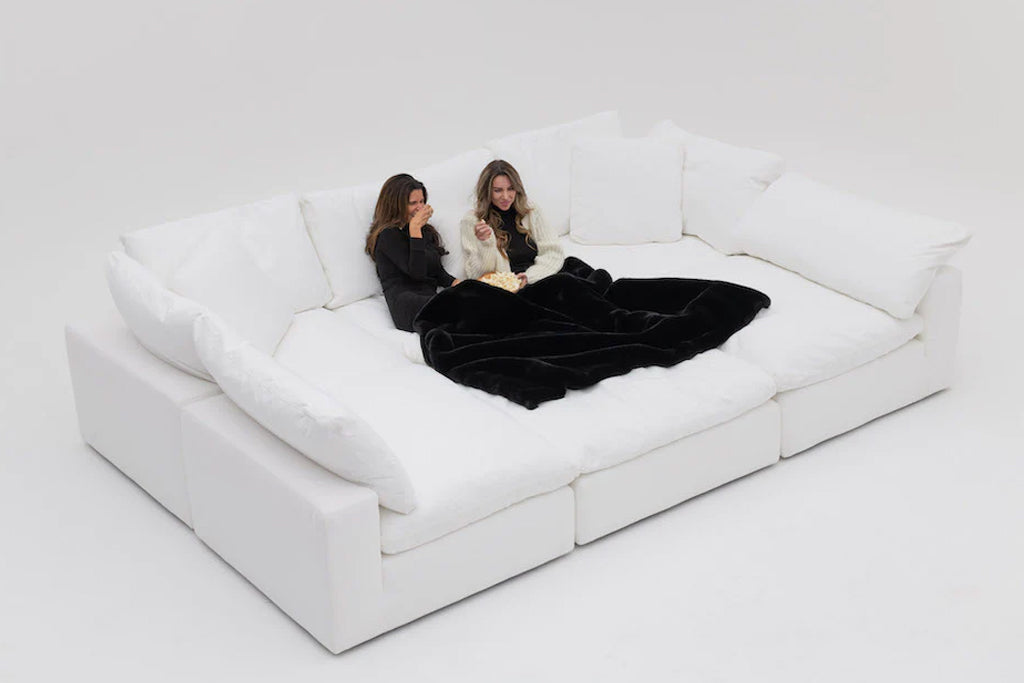

Choosing a sectional starts with understanding how different shapes affect the way a living room works. From L shaped and U-shaped layouts to chaise, pit, and modular designs, each configuration creates a different balance of seating, movement, and lounging space. Exploring different sectional couch styles can make it easier to narrow down the right layout for your room.
Soulfa has specialized in modular cloud-style seating since 2015, with individual modular cubes that can be used to create a wide range of sectional configurations as your space and seating needs change.
Start With the Shape of Your Room
The shape of a sectional should work with the architecture of your living space rather than compete with it. Before choosing a design, consider the location of walls, windows, doors, walkways, and other furniture.
A smaller room may benefit from a compact L shaped or chaise configuration, while a larger open concept space may have enough room for a U shaped or pit sectional. The available floor area also affects how much clearance you need around the sofa.
Think about how people move through the room as well. A sectional that provides plenty of seating but blocks a main walkway may not function well in everyday use.
L Shaped Sectional: A Practical Corner Layout
An L shaped sectional has two seating sections that meet at a right angle. This makes it particularly useful for placing furniture along two walls or creating a defined seating zone in an open room.
L shaped sectionals can provide several seats without requiring the footprint of a large U-shaped design. They also create a natural corner for lounging while leaving one side of the room open.
For homeowners considering this layout, L shaped sectional options can help illustrate how different cube combinations affect the overall arrangement.
An L shaped configuration can work well for:
Medium and large living rooms
Open concept spaces
Rooms where one corner needs to be utilized
Families who want shared seating without enclosing the entire area
U Shaped Sectional: Designed for Group Seating
A U-shaped sectional extends seating around three sides of a central area. It creates a more enclosed conversation zone and can accommodate several people at once.
This configuration is often suited to larger rooms where there is enough space for the sectional to extend outward without restricting movement.
U shaped sectionals can be useful for households that frequently host guests, watch television together, or want a dedicated gathering area. Because of their larger footprint, measuring the room carefully is especially important before selecting one.
Chaise Sectional: Combining Seating and Lounging
A chaise sectional combines a traditional seating area with an extended section designed for stretching out. Unlike a symmetrical sectional, the chaise creates a more directional layout.
This can be useful when one person wants additional lounging space without turning the entire sofa into a deep seating arrangement.
A chaise sectional can fit well in smaller living rooms because it provides a dedicated lounging area while maintaining a relatively straightforward footprint. It can also work in bedrooms, media rooms, and multifunctional spaces where flexibility matters.
Pit Sectional: A Deep Lounge Arrangement
A pit sectional is designed around a deeper, more lounge-oriented seating area. Instead of simply extending the sofa along one or two walls, a pit arrangement creates a central space surrounded by seating.
This style is particularly suited to movie rooms, large family rooms, and entertainment-focused spaces. The deeper configuration can provide room for reclining, stretching out, and sitting in different positions.
For example, Soulfa's 6 Cube configuration can be arranged as a large sectional or movie pit, allowing the same modular pieces to create different seating and lounging layouts.
Modular Sectional: Flexible by Design
A modular sectional is made from separate pieces that can be arranged into different configurations. Instead of being limited to one fixed shape, the individual modules can be repositioned as the needs of the room change.
This makes modular sectionals useful for people who move furniture frequently or expect their living space to evolve over time.
A modular sectional can be arranged as an L shape, U shape, chaise configuration, or larger lounge layout depending on the number and type of modules available.
The key difference is flexibility. While traditional sectionals generally maintain one fixed arrangement, modular seating can offer more options for adapting the layout.
Soulfa's modular system is built around just three versatile pieces the Armless, Corner, and Ottoman which can be combined and rearranged to create multiple configurations. The Corner module can also function as an end piece, giving you additional flexibility when changing the layout.
Corner Sectional: Make Use of an Unused Area
A corner sectional is designed to fit naturally into a corner of the room. It can help make use of space that might otherwise remain empty while creating a defined seating area.
Corner configurations can be especially useful in open concept rooms where furniture needs to establish boundaries without adding walls.
When choosing a corner sectional, consider whether the corner is truly suitable for furniture placement. Windows, radiators, electrical outlets, doors, and built-in features can all affect the usable area.
Double Chaise Sectional: More Room to Stretch Out
A double chaise sectional provides extended lounging areas on both sides of the main seating section. Rather than having one dominant chaise, this layout creates a balanced arrangement where multiple people can stretch out.
It can be useful for households where the sofa is used for relaxing, watching movies, reading, or spending extended periods together.
Because the two extended sections increase the overall footprint, this design usually works best in larger living rooms. It is important to measure both the width and depth of the room before choosing this configuration.
How Do These Sectional Types Compare?
The main differences between sectional configurations come down to shape, space, seating capacity, and flexibility.
An L shaped sectional is often suited to corner placement and open living rooms. A U-shaped sectional creates a larger central gathering area. A chaise sectional prioritizes one extended lounging section, while a double chaise provides lounging space on both sides.
A pit sectional focuses on deep, relaxed seating. A modular sectional stands out for its ability to change configuration. A corner sectional emphasizes efficient use of a room's corner.
There is no single layout that works for every living room. The right choice depends on how the space is arranged and how the household uses the sofa.
Which Sectional Sofa Is Best for Your Living Room?
The question of which sectional sofa is best depends on the room and the way you plan to use it.
For a compact or medium sized room, an L shaped or chaise sectional may provide a useful balance between seating and open floor space.
For larger rooms, a U-shaped sectional, double chaise, or pit sectional can create a more substantial seating area.
If flexibility is important, a modular sectional may offer more possibilities because individual pieces can be rearranged.
If you regularly entertain, focus on seating capacity and conversation flow. If the sofa is mainly used for relaxing or watching movies, depth and lounging space may become more important.
Looking through current sectional designs can also help you compare different configurations and understand how various layouts translate into real furniture arrangements.
Consider Comfort Beyond the Shape
The shape of a sectional is only one part of the decision. Seat depth, cushion construction, upholstery, and overall support can significantly affect how comfortable the sofa feels.
A deeper sectional can provide more room for lounging, but it may not be ideal for someone who prefers a more upright sitting position. Similarly, softer cushions may feel inviting while firmer construction can provide more structured support.
This is where cushion choice matters just as much as sectional shape. Soulfa's Standard seat cushion, included at no extra cost, combines Feather/Down/Dacron over a supportive foam base. It provides a comfortable, firmer feel that's well suited to upright seating and everyday use.
For pit and chaise-style layouts where lounging is the priority, the optional Triple-Layered™ cushion (+$300 per modular cube) features a supportive foam core between two plush Feather/Down/Dacron layers. This creates a softer, more luxurious cloud-like feel while maintaining supportive structure and shape. It's Soulfa's most popular cushion upgrade, chosen by 9 out of 10 customers.
Consider how the sofa will be used most often. A sectional intended for daily family seating may need different characteristics from one primarily used for occasional entertaining.
Think About Flexibility and Future Changes
Your living room may not always look the same. Furniture can move, rooms can be repurposed, and household needs can change.
This is where modular construction can be particularly useful. A sectional made from individual pieces can potentially be rearranged when you change your room layout.
For example, a large modular arrangement can provide multiple possibilities depending on how the individual pieces are positioned. Soulfa's 6 Cube sectional and movie pit demonstrates how a larger modular configuration can serve different lounging and seating purposes.
This flexibility also means you can add modules later or reconfigure your existing pieces if you move to a new home or your seating needs change.
A Simple Sectional Selection Checklist
Before choosing a sectional, consider:
-
Measure the available floor area.
-
Check doorways, hallways, and stairs for access.
-
Decide how many people need regular seating.
-
Identify whether lounging or upright seating is the priority.
-
Consider whether you need a fixed or rearrangeable layout.
-
Check the sectional's depth and overall dimensions.
-
Decide between the Standard and Triple-Layered™ seat cushion.
-
Think about how the configuration will work with existing furniture.
-
Leave enough room for comfortable movement around the sofa.
Taking these points into account can help narrow down the many types of sectional couches available.
Find the Sectional Shape That Fits Your Space
Understanding the different types of sectional couches makes the selection process more practical. L shaped, U shaped, chaise, pit, modular, corner, and double chaise designs each serve different spatial and lifestyle needs.
Instead of choosing based only on appearance, consider the room's dimensions, traffic flow, seating requirements, comfort preferences, and potential future changes. A sectional should support the way the room is actually used.
If you still have questions about configurations, dimensions, materials, or choosing between different sectional styles, you can contact us for additional information.
Frequently Asked Questions
1. What are the types of sectional couches?
Common types include L shaped, U shaped, chaise, pit, modular, corner, and double chaise sectionals. Each configuration offers a different combination of seating capacity, room coverage, and lounging space.
2. Which sectional sofa is best for a small living room?
An L shaped or chaise sectional can work well in a smaller living room because it can provide multiple seats without occupying the entire room. Exact suitability depends on the room's dimensions.
3. What is the difference between an L shaped and U shaped sectional?
An L shaped sectional has two connected seating sections that form an L, while a U shaped sectional extends seating around three sides of a central area. U shaped designs generally require more floor space.
4. Is a modular sectional better for changing room layouts?
A modular sectional can offer more flexibility because its individual pieces can potentially be rearranged into different configurations. This can be useful when room layouts or household needs change.
5. What should I measure before buying a sectional?
Measure the available floor area, wall lengths, doorways, hallways, stairways, and the intended seating area. Also check the sectional's overall width, depth, and height to make sure it fits comfortably within the room.